Shopping for a storage shed means wading through dozens of sizes, materials, and brands, and a wrong pick is expensive to reverse. To save you the research, we compared specifications and cross-referenced owner feedback on the best storage sheds currently on the market, from budget steel boxes to premium resin buildings big enough to walk into. Below are our seven top picks for 2026, organized by the situation each one solves best, followed by a buying guide and answers to the questions we hear most from readers.
Quick Comparison
| Shed | Best For | Material | Approx. Size | Approx. Price |
|---|---|---|---|---|
| Suncast Tremont 8×10 | Best Overall | Resin w/ steel roof trusses | 70-86 sq ft | $1,100-$2,300 |
| Lifetime 6411 | Best Value | Steel-reinforced dual-wall HDPE | 8×7.5 ft | Varies by retailer |
| Keter Artisan 7×7 | Best Modern Design | Steel-reinforced resin | 50 sq ft | ~$1,504 |
| Rubbermaid Big Max 7×7 | Sturdiest Build | Double-wall resin | ~49 sq ft | $998-$1,300 |
| Duramax WoodBridge Plus 10.5×8 | Best Traditional Look | Vinyl over steel frame | 84 sq ft | $1,239-$1,659 |
| Arrow Elite 8×6 | Best Budget/Metal | Galvalume steel | 46 sq ft | ~$795 |
| Aoxun 8×10 | Best Bang for the Buck | HDPE resin | 8×10 ft | Varies by retailer |
#1 · BEST OVERALL
Suncast Tremont 8×10
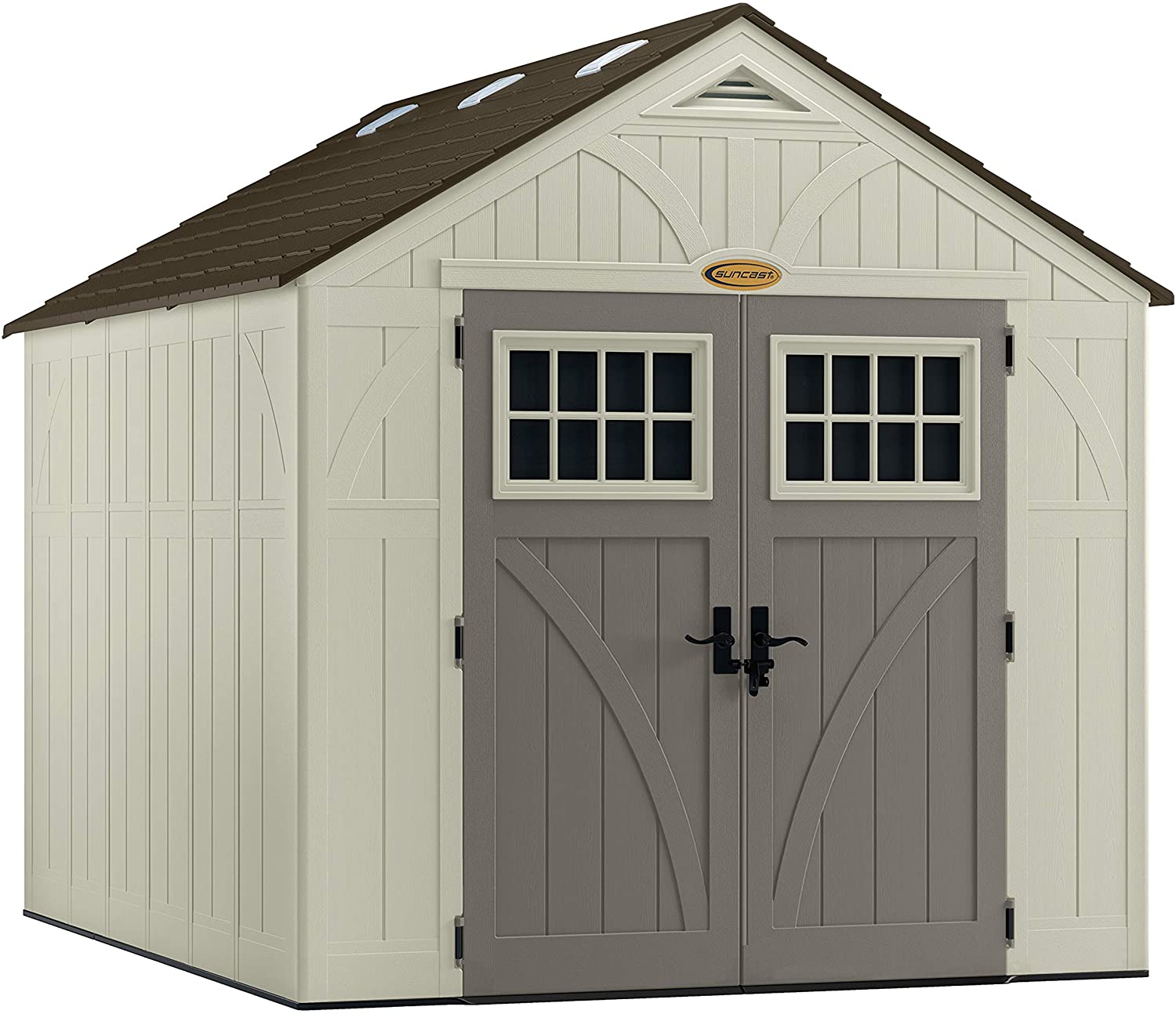
8×10 ftResin + steel roof$1,100-$2,300
The Tremont has become one of the most recommended sheds on the market for good reason. It pairs the low maintenance of resin with the structural backbone of a metal roof beam, so it doesn’t sag the way pure plastic sheds can over time.
Key features:
- Two windows plus six skylights for natural light
- Reinforced floor rated to hold riding mowers or small tractors
- 10-year manufacturer warranty
- Available in multiple footprints (4×8 up to 8×16) so it scales with your yard
Pros: Bright interior, strong floor, respected warranty, and a clean look that works in most neighborhoods.
Cons: Some buyers report brittle plastic bolts with an odd metric thread size that’s hard to replace locally, and a few units have shipped with misaligned panels or missing hardware.
Best for: Homeowners who want one shed to handle mowers, bikes, and general yard equipment without babysitting it for a decade. We’ve also published a full review of the Tremont if you want the deeper dive.
#2 · BEST VALUE
Lifetime 6411
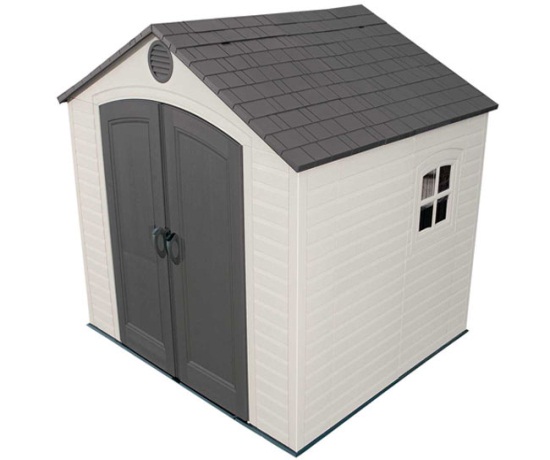
8×7.5 ftSteel-reinforced HDPE10-yr warranty
Lifetime is one of the best-selling shed brands for a reason, and the 6411 is the value pick of the range: steel-reinforced dual-wall polyethylene construction with a real 10-year limited warranty, at a price that consistently undercuts comparable resin sheds. We’ve put this model through a full Lifetime 6411 review, along with four other Lifetime sheds over the years.
Key features:
- Steel-reinforced double polyethylene walls with powder-coated steel A-frame roof trusses
- 6’8″ of headroom and a wide 4-foot door opening with an internal locking latch
- Slip- and stain-resistant HDPE floor included
- Shatterproof window that opens halfway, plus a peak screen vent for airflow
- Extension kits available if you need more space later
Pros: Sturdy, good-looking build that fits a mower plus plenty of extra storage, a complete poly floor, and a 10-year warranty. That adds up to strong value at this price point.
Cons: The assembly manual glosses over a few critical details, most notably which truss holes to use; guess wrong and you’ll rebuild the roof. Owners also report the doors’ instructions are confusing, screws strip easily under a power driver, and panels can expand and contract in temperature extremes. Our full review covers how to avoid the assembly traps.
Best for: Budget-conscious buyers who want steel-reinforced durability and a real warranty, and are willing to take assembly slowly.
#3 · BEST MODERN DESIGN
Keter Artisan 7×7

7×7 ftReinforced resin~$1,504
If your yard leans toward clean, contemporary lines rather than a traditional peaked-roof barn look, the Artisan is the shed to beat. Its flat-roof, “Duotech” wall design looks more like a modern outbuilding than a typical storage box.
Key features:
- Steel-reinforced double walls rated for winds up to 90 mph
- Walls can be painted or drilled into, unlike most resin sheds
- D-Clip anchor system for adding interior shelving
- Skylight windows and an included floor
Pros: Distinctive look, a genuinely strong wind rating, and more customizable than most resin sheds thanks to the paintable, drillable walls.
Cons: Priced higher than comparable resin sheds its size, and some owners report panel-fitment issues if the base pad isn’t perfectly level. We cover the fit-and-finish issues in more detail in our Keter Artisan review.
Best for: Buyers who care as much about curb appeal as function and don’t mind paying a premium for a modern silhouette.
#4 · STURDIEST BUILD
Rubbermaid Big Max 7×7
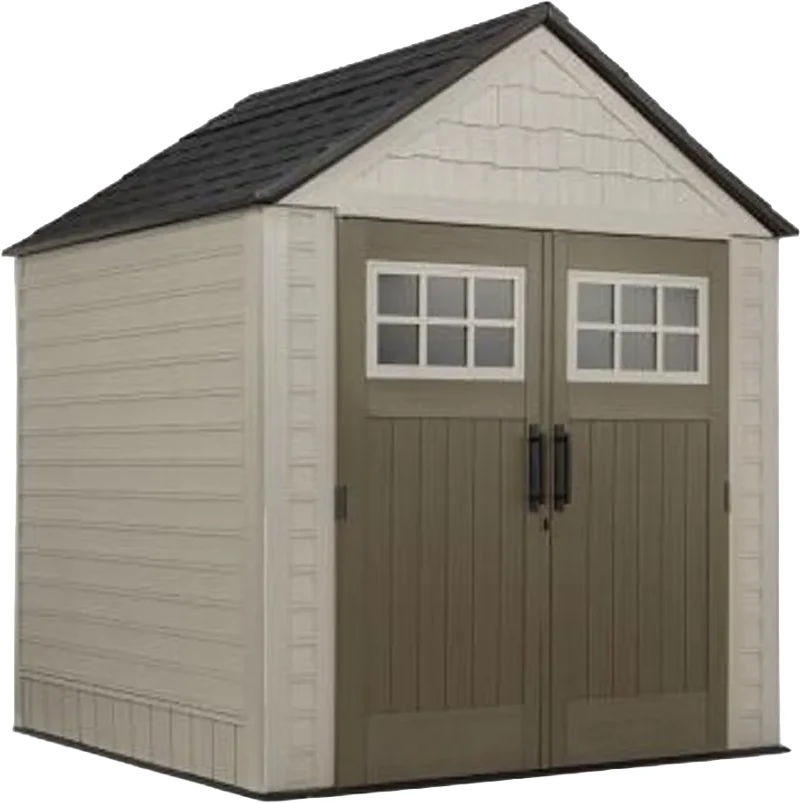
7×7 ftDouble-wall resin$998-$1,300
The Big Max has a reputation for feeling like the thickest, most solid resin shed in its size class. The walls simply don’t flex the way cheaper models do, and the floor is rated to hold a riding mower without cracking.
Key features:
- Heavy double-wall resin construction
- Reinforced floor for heavier equipment
- Compact 7×7 footprint that fits tighter side yards
Pros: Feels noticeably sturdier than competitors at a similar price, and routinely available for under $1,100 during sales.
Cons: One important caveat: our own full Big Max review documents that the roof clips can fail in sustained winds above 50 mph unless you install the anchor kit. Doors can also warp over time, and hinge gaps let in small pests. Budget for ground anchors as a mandatory add-on, not an optional extra.
Best for: Buyers in calmer wind climates who want the sturdiest-feeling resin shed and are willing to add proper anchoring.
#5 · BEST TRADITIONAL LOOK
Duramax WoodBridge Plus 10.5×8
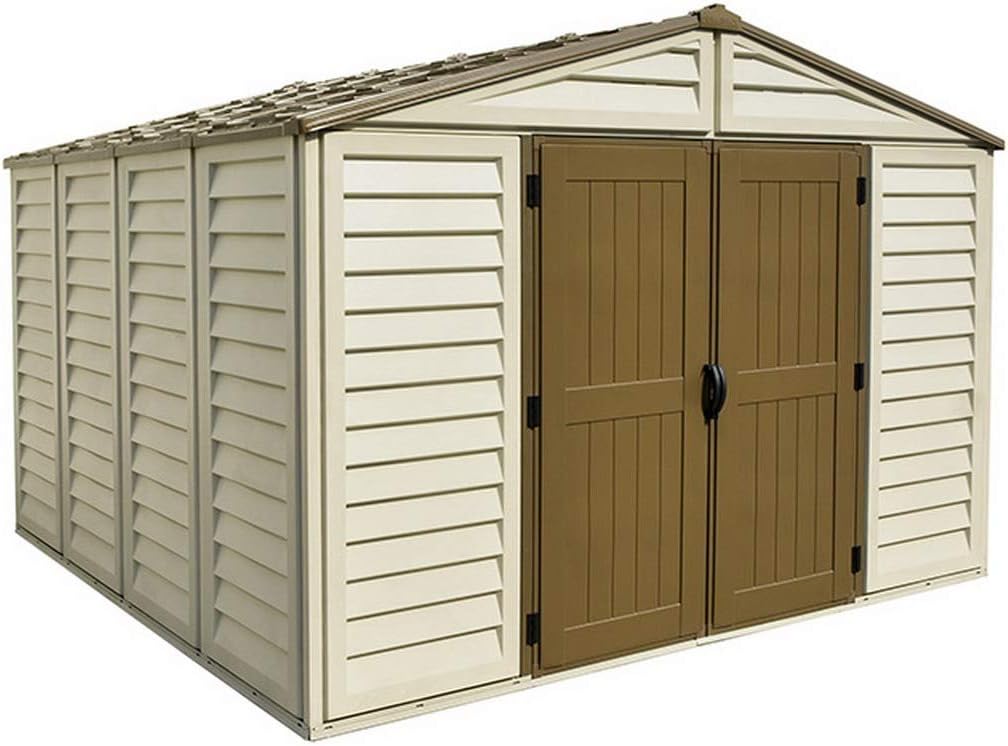
10.5×8 ftVinyl over steel$1,239-$1,659
For anyone who wants their shed to look like a small barn rather than a plastic cube, the WoodBridge Plus delivers with a beige-and-brown color scheme, a simulated-shingle roof, and a real window.
Key features:
- Vinyl panels over a steel frame that won’t rust, dent, or peel
- Included foundation/framing kit
- 15-year warranty
- Scales up to 130+ sq ft in larger configurations
Pros: The best-looking option here if you want a shed that reads as a classic outbuilding rather than a storage box, and the long warranty backs up the vinyl durability claim.
Cons: Assembly is longer and more involved than resin competitors, with some owners describing cheap hinges and handles, and a handful of reports of roof-panel fading or leaks after a couple of years.
Best for: Buyers prioritizing aesthetics and willing to trade a harder assembly for a more traditional look.
#6 · BEST BUDGET METAL
Arrow Elite 8×6
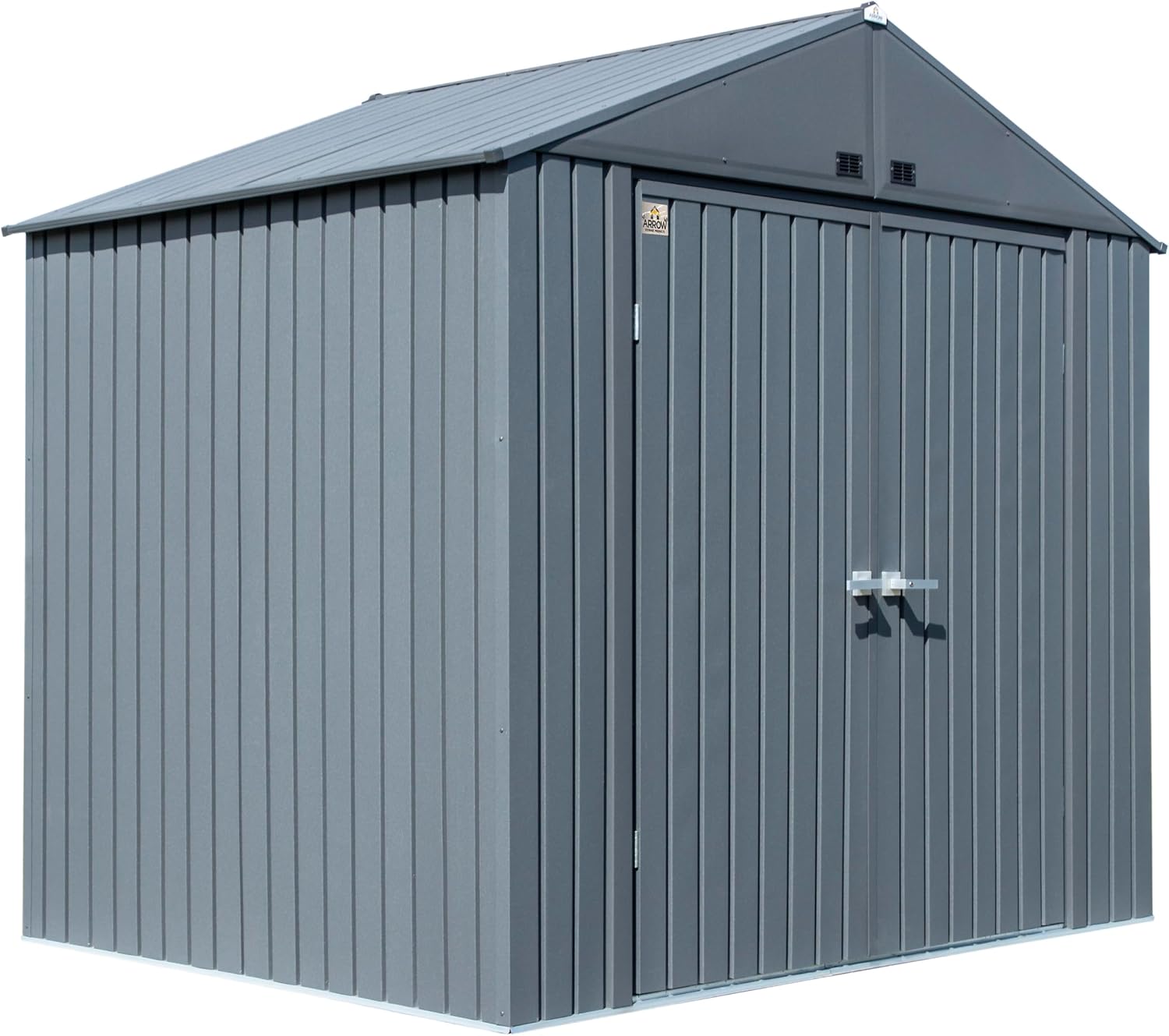
8×6 ftGalvalume steel~$795
Not every yard needs, or can afford, a resin building. The Arrow Elite is a solidly built steel shed that undercuts every resin option on this list while still offering real corrosion resistance.
Key features:
- Galvalume steel construction resists rust better than older Arrow lines
- Brushed-metal key-lock door handles for basic security
- 15-year warranty
Pros: Lowest price point on this list at around $795, solid security hardware for the price, and steel construction that some buyers actually prefer over resin for wind resistance when properly anchored.
Cons: Smaller interior than resin sheds of similar footprint due to internal bracing, and metal sheds generally show dents more visibly than resin.
Best for: Buyers who want secure, weatherproof storage on a tight budget and don’t need a large walk-in interior.
#7 · BANG FOR THE BUCK
Aoxun 8×10 Resin Shed
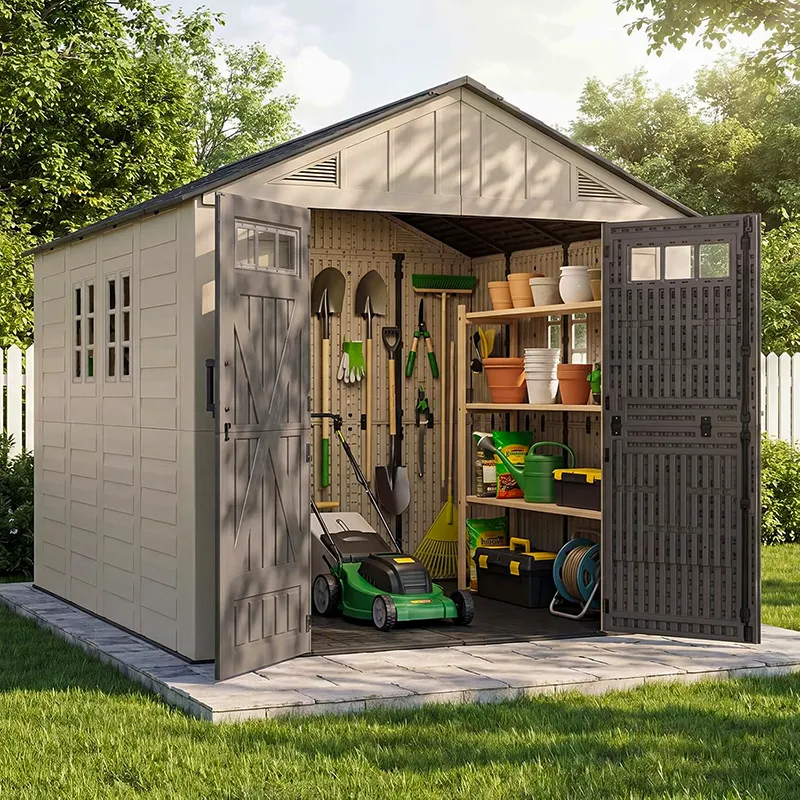
8×10 ftHDPE resinBudget price
Brand-name resin sheds in the 8×10 class routinely run well past $1,000. The Aoxun 8×10 undercuts them significantly while keeping the features that matter: HDPE resin construction, an included floor, windows, and lockable double doors with a wide 54-inch opening that swallows a riding mower or a wall of bikes.
Key features:
- High-density polyethylene (HDPE) panels: no rot, rust, or splintering, with UV and fade resistance
- Built-in floor included, with no separate purchase needed, unlike many budget sheds
- Lockable double doors with a 54-inch-wide opening for mowers and wheelbarrows
- Roughly 80 sq ft; the manufacturer rates it for 5 adult bikes or a large riding mower
Pros: The lowest path to a full-size 8×10 resin shed on this list, with the floor included in the price and genuinely wide door access.
Cons: Aoxun doesn’t have the decades-long track record of Suncast, Keter, or Lifetime, and it doesn’t publish a wind rating, so treat a level base and ground anchoring as mandatory, and expect less established parts/warranty support than the legacy brands.
Best for: Buyers who want maximum resin-shed floor space per dollar and are comfortable trading brand pedigree for price.
Buying Guide: What to Consider Before You Buy
Size and footprint
Measure your intended site first, then work backward. Most manufacturers recommend leaving at least a foot or two of clearance around the shed for maintenance access, and you’ll want to check local setback rules (see below) before finalizing a size.
Material trade-offs
Resin and plastic sheds (Suncast, Lifetime, Keter, Rubbermaid) are low-maintenance, won’t rust, and resist fading better than older plastic generations, though pricing climbs quickly with size. Steel sheds (Arrow) cost less and hold up well to wind when anchored, but dent more visibly and can be prone to condensation without vents. Vinyl-over-steel (Duramax) and wood options look the most traditional but need more assembly effort and, for wood, ongoing maintenance like sealing or staining.
Foundation and site prep
Nearly every shed on this list performs better, and keeps its warranty valid, when installed on a level, prepared base: compacted gravel, a concrete pad, or a manufacturer-approved foundation kit. Skipping this step is the single most common cause of the door-alignment and panel-gap complaints we see in owner reviews.
Wind and climate
If you’re in a high-wind region, don’t treat anchor kits as optional, even on sheds rated for high wind speeds. Several complaints on this list, notably the Rubbermaid Big Max, trace back to skipped anchoring. In snow-load regions, check the roof’s rated capacity before buying.
Permits and HOA rules
Many municipalities require a permit for sheds over a certain size (commonly 100-200 sq ft) or a certain height, and HOAs often have their own color, material, or placement restrictions. Check both before you order.
Budget tiers
- Under $900: Compact steel sheds (Arrow Elite), best for tools and basic equipment.
- $1,000-$1,600: The bulk of resin sheds (Lifetime, Rubbermaid, Keter), the sweet spot for most homeowners.
- $1,600+: Larger resin buildings (Suncast Tremont in bigger sizes) and vinyl-style sheds (Duramax), for buyers who want a shed that can double as a workspace or want a more architectural look.
Frequently Asked Questions
What size storage shed do I actually need?
As a rough guide, an 8×10 shed comfortably fits a riding mower plus general yard tools; a 6×8 or smaller works for hand tools, a grill, and patio furniture cushions. If you’re on the fence, size up. Buyers more often regret buying too small than too large.
Do storage sheds need a permit?
Often, yes, once you cross a size or height threshold set by your local building department, commonly triggered around 100-200 sq ft. Always check before purchasing, since a shed that requires a permit but doesn’t have one can complicate a future home sale.
Is resin or metal better for a storage shed?
Neither is universally better. Resin resists rust and fading with zero maintenance but costs more per square foot at larger sizes. Metal costs less and handles wind well when anchored, but shows dents and can develop condensation without adequate venting.
Do I need a foundation under my shed?
Yes, in almost every case. A level gravel pad, concrete slab, or the manufacturer’s foundation kit prevents the door misalignment, panel gaps, and moisture issues that show up most often in negative owner reviews.
How long does a resin shed actually last?
Well-installed resin sheds from reputable brands typically perform well for 10-plus years, especially with a solid foundation and, in windy regions, proper ground anchoring. Most of the warranties on this list run 10 to 15 years.
What does anchoring a shed actually involve, and is it worth the cost?
Most kits run $20 to $50 and bolt the shed’s base to ground augers or a concrete pad, adding maybe an hour to assembly. Given that several of the wind-related complaints on this list, including warping doors and lifted roof clips, trace back to skipping this step, it’s one of the cheapest upgrades you can make relative to the cost of the shed itself.
Which shed on this list is easiest to assemble?
Owners consistently rate the Rubbermaid Big Max as having the clearest instructions among resin sheds. The Lifetime 6411 is manageable but has a known trap in the truss-hole placement, so watch the manufacturer’s assembly video before you start. The Duramax WoodBridge Plus requires more care than the resin options, particularly squaring the base frame before securing panels.
Final Recommendation
For most homeowners, the Suncast Tremont 8×10 remains the best all-around choice, combining a reinforced floor, strong warranty, and enough size flexibility to fit most yards. If budget is the deciding factor, the Lifetime 6411 delivers steel-reinforced durability for meaningfully less money, and the Arrow Elite 8×6 is the pick if you just need secure, weatherproof storage without resin pricing.
Whichever you choose, invest in a proper foundation and anchor kit. It is the cheapest insurance you can buy against the most common complaints reported across every brand on this list.