Weather is what kills outdoor storage. Sun makes cheap plastic brittle, standing water rots wood and rusts steel, and wind finds every loose panel. The fix is half buying decisions and half habits: pick the right material for your climate, then spend a few minutes a season on the maintenance that keeps it sealed.
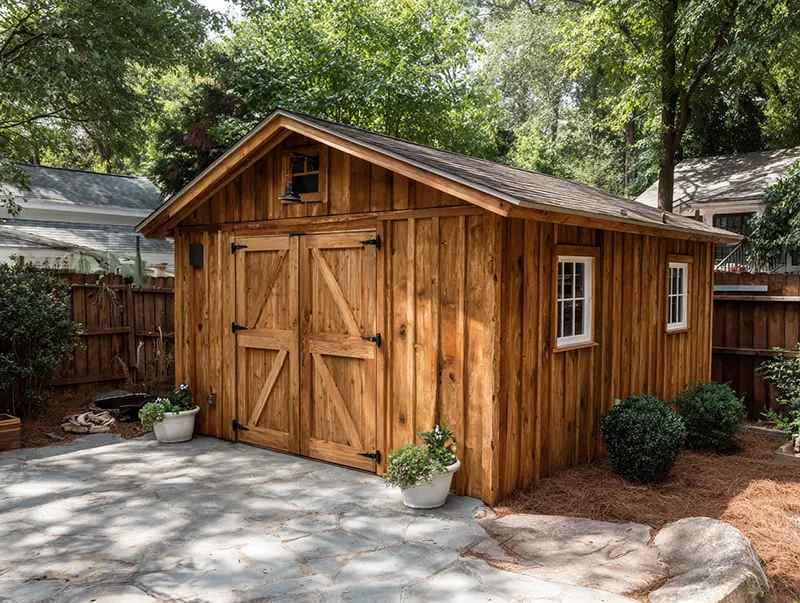
Your local climate decides your priorities. Heavy rain means seals and elevation, intense sun means UV protection, snow country means roof load, and wind country means anchoring above all else. In our Rubbermaid Big Max testing, the roof clips held fine until sustained winds passed 50 mph; with the anchor kit installed, the problem disappeared.
Seals, tarps, and a sheltered site all buy extra protection, but none of them substitutes for a twice-yearly inspection. Small problems caught early (a lifted roof panel, a cracked seal) cost minutes; the same problems a season later cost replacements.
Key Takeaways
- Material choice does most of the work: resin shrugs off moisture, wood needs yearly sealing, metal needs its coating intact.
- Match the strategy to your climate: elevation and seals for rain, UV protection for sun, anchoring for wind.
- Inspect twice a year, spring and fall. It is the cheapest weatherproofing there is.
Materials and Construction
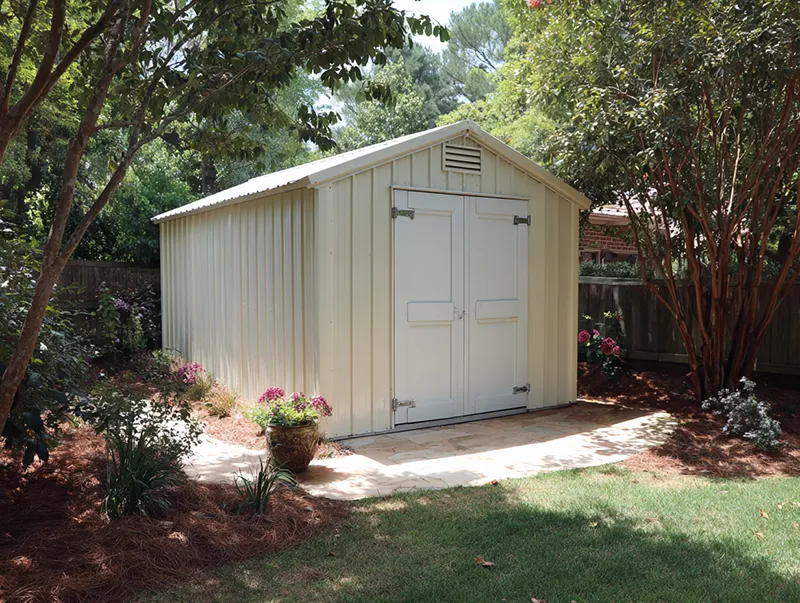
Weatherproofing starts at purchase. The material and the build details below determine how much work the weather can do on your shed.
Choosing the Right Materials for Weather Resistance
Materials are the foundation of weatherproofing. Wood options like teak and cedar are natural choices due to their inherent oils that resist rot and repel insects. Hardwoods are preferable for their durability in fluctuating temperatures. However, they require regular treatment to maintain their weather-resistant properties.
Metal units live and die by their coating. Galvanized, Galvalume, or powder-coated steel resists rust until the coating is scratched, so touch-up paint is part of ownership. Vents matter too: unvented metal sheds sweat condensation onto everything inside.
Plastic and resin storage is light, affordable, and impervious to rust and rot. It is also the class we cover most: the Lifetime 6411 pairs UV protection with weather-resistant seams, which is exactly the combination to look for on a spec sheet. Molded resin wicker gives you the woven look with none of the weather worry.
Choose water-resistant and UV-protected outdoor fabrics to prevent fading and mildew growth.
| Material | Properties | Maintenance Required |
|---|---|---|
| Wood | Rot-resistant, insect-repelling | Regular sealing/staining |
| Metal | Strong, rust-resistant with coating | Minimal, check for scratches |
| Plastic | Moisture-resistant, decay-proof | Occasional washing |
| Fabric | UV-protected, water-resistant | Varies depending on type |
Construction Techniques for Enhanced Longevity for Outdoor Sheds
Robust construction is as vital as the material itself. Use galvanized or stainless steel fasteners to prevent rusting that can compromise structural integrity.
Joints should be tight and, where possible, reinforced. In wood construction, dovetail joints hold up best under load and seasonal movement.
Get storage up off bare ground. A concrete pad or compacted gravel base stops ground moisture from wicking into wood and metal, and it is the single best predictor of how well a shed kit goes together. Our guide to choosing a shed site covers base prep step by step.
Roof design also matters; slanted roofs facilitate water runoff, reducing the risk of leaks and water damage. In areas with heavy snowfall, roofs should be built to support the weight of the snow load.
Weatherproofing Strategies
Once the shed or box is in place, three layers of defense matter: coatings, covers, and seasonal habits.
Sealants and Coatings for Protection
Coatings are cheap insurance for wood and metal. Resin needs none, which is most of its appeal.
- Wood Surfaces:
- Sealant: A waterproof sealant should be applied to block moisture.
- Varnish: Use a varnish for a finish that provides UV protection.
- Paint: Paint with additives to resist mold and provide additional UV protection.
- Metal Surfaces:
- Rust-Preventive Paint: A layer of rust-preventive paint can ward off corrosion.
- Wax: A wax coating should be applied periodically for extra waterproofing and rust prevention.
Covers and Enclosures to Shield from Elements
Covers help most for items that live outside a shed: grills, furniture, and deck boxes in brutal sun. Two rules:
- Materials:
- Breathable Fabric: Choose covers made from breathable fabric to avoid moisture build-up.
- UV-Resistant Materials: Opt for materials specifically designed to block harmful UV rays.
- Installation:
- Secure Fit: Covers should fit snugly to prevent wind from blowing them away.
- Complete Enclosure: Full enclosures provide better protection compared to partial covers.


Maintaining Outdoor Storage Through Seasons
Seasonal checkpoints, spring and fall:
- Inspection:
- Periodically check for signs of wear, such as peeling paint or rust spots, and address them promptly.
- Cleaning:
- Keep the storage clean from debris and mildew to prevent material decay.
- Ensure roofing is intact and free of leaks to maintain a dry interior.
Routine Maintenance and Cleaning
Maintenance is boring and it works. Here is the short version of what to actually do.
Regular Maintenance to Prevent Wear and Tear
Inspect sheds and containers quarterly for cracks, loose parts, and lifted panels. On metal, treat rust the day you spot it: sand the area and apply a rust-resistant coating before it spreads under the finish.
- Check Insulation: Ensure that insulation is intact to guard against extreme temperatures.
- Lubricate Hinges: Keep moving parts, like hinges, well-lubricated to prevent seizing.
Effective Cleaning Methods for Stored Items
Cleaning stored items requires specific methods; mild soap and water work effectively for plastic and metal items. Wipe down surfaces with a sponge or cloth, especially to remove stains and prevent mold growth.
- Soft Brushes: To reach crevices and textures, use soft brushes that won’t scratch surfaces.
- Avoid Harsh Chemicals: Stick to mild detergents to prevent degrading material integrity.
Dry items in the shade, not the sun, and never store anything damp. Trapped moisture is how mold starts, even inside a well-sealed box.
Frequently Asked Questions
Quick answers to the weatherproofing questions we hear most.
What materials are best for weatherproofing an outdoor storage shed?
The best materials for weatherproofing an outdoor storage shed include high-quality, weather-resistant paints, silicone or acrylic caulks for sealing gaps, and rubber seals for doors and windows. For roofing, consider using metal roofing or asphalt shingles designed for high durability. Pressure-treated wood or composite materials are excellent choices for the shed’s structure due to their resistance to rot and pests.
How often should I inspect and maintain my outdoor storage shed for weather damage?
We recommend you inspect your outdoor storage shed at least twice a year, typically in the spring and fall. This routine should include checking for leaks, ensuring the roof is intact, looking for rot or pest infestation signs, and ensuring that doors and windows are properly sealed.
What are the key areas to focus on when weatherproofing a shed?
Key areas to focus on include the roof, doors, windows, the base or foundation, and the walls. Ensure the roof has no leaks and is properly sealed. Doors and windows should fit snugly and have weather stripping to prevent water ingress. The foundation should keep the shed off the ground to avoid water damage, and the walls should be treated or painted to resist the elements.
Can I weatherproof an old shed, or should I consider replacing it?
You can weatherproof an old shed as long as its structure is sound. Start by assessing the shed for any significant damage. If the foundation, walls, and roof are in good condition, you can proceed with weatherproofing measures such as sealing, painting, and replacing damaged parts. However, if the shed shows extensive damage, replacing it might be more cost-effective.
What steps can I take to protect my shed from strong winds?
To protect your shed from strong winds, ensure it is securely anchored to the ground. Use heavy-duty anchors specifically designed for your foundation type, whether it is concrete, wood, or another material. Additionally, reinforcing the structure with extra framing and hurricane straps can provide added stability.