Garden tools last far longer if you put them away clean, dry and lightly oiled, and store them off the ground. That is about two minutes of work after each use. Once a year, sharpen the edges and oil the wooden handles. This guide covers each step, using the methods university extension services recommend.
How we wrote this: this guide is based on advice from University of Illinois Extension, University of Minnesota Extension, Iowa State University Extension and the UC Master Gardeners of Santa Clara County, checked in November 2026. Each source is linked where we use it.
Key Takeaways
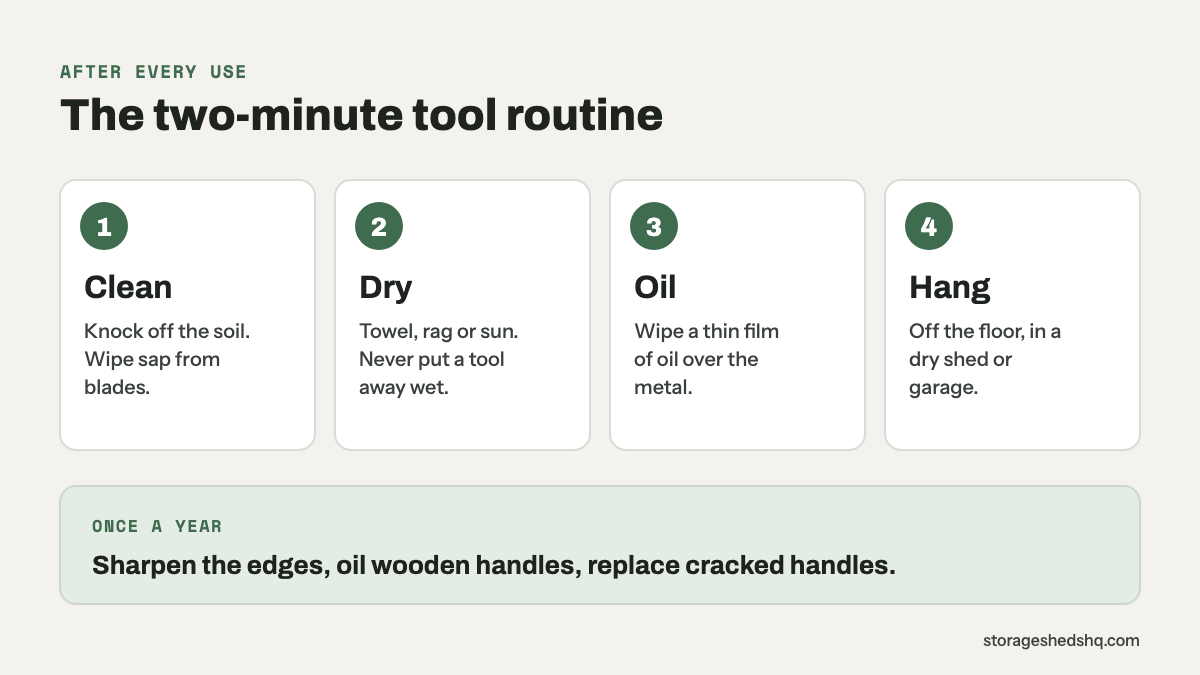
- After every use: knock off the soil, dry the tool, wipe the metal with oil and hang it up.
- Once a year: sharpen the edges and rub boiled linseed oil into wooden handles.
- Disinfect pruners after cutting a diseased plant. Rubbing alcohol is the easiest method.
- Store tools off the floor in a dry shed or garage. Tools left outside rust.
After Every Use: Clean and Dry
Soil holds moisture against steel, so get it off before the tool goes away. University of Illinois Extension suggests a wire brush, a paint scraper or a strong blast from a hose for caked-on soil on shovels and trowels. Wipe pruners and shears to remove sap and moisture. For sap that will not wipe off, it lists turpentine, alcohol or mineral spirits.
Then dry the tool. The UC Master Gardeners of Santa Clara County say never to store tools wet: use the sun, a towel or a rag. They also point out that fertilizer and other garden chemicals are especially corrosive. A trowel, spreader or sprayer that has touched them needs cleaning most of all.
Oil the Metal to Keep Rust Away
Once a tool is clean and dry, a thin film of oil keeps air and moisture off the steel. Illinois Extension recommends an oil-based protective coating on every metal surface, and the UC Master Gardeners do the same job with an oily rag before tools go away.
They differ on which oil. Illinois Extension mentions WD-40 for a light coat after sharpening. The UC Master Gardeners say WD-40 is all right if it is all you have, but it leaves a sticky residue that attracts dirt. For the pivot of pruners and shears they prefer household oil or a greaseless lubricant. Any light oil beats none.
If rust has already started, the UC Master Gardeners say to remove it with a wire brush before you oil the tool. For heavy rust, a soak in white vinegar can help as a start. Follow it with steel wool, and the finer the grade the better.
Sharpen Once a Year
Pick a quiet time in the gardening year and check every edge. A sharp tool cuts cleanly and takes less effort, so it puts less strain on the tool and on you.
- Sharpen only the beveled edge, and keep the original angle. Both the UC Master Gardeners and Illinois Extension say this.
- Color the bevel with a marker, then sharpen until the color is gone evenly. That shows you are holding the angle.
- Do not thin a blade so much that it could bend in a cut.
- A shovel does not need a keen edge. File away any metal that has folded back on itself.
- Take pruners apart if you can. Illinois Extension notes that good hand pruners can be disassembled for cleaning and sharpening, and that many makers sell replacement blades.
For the sharpening itself, Illinois Extension describes three options. A whetstone needs a lubricant such as 3-in-1 oil. A diamond-coated flat file needs only water. A ceramic sharpener is handy for a quick job during the season. It advises against power grinding stones, because the heat from friction can make the metal brittle. Finish by wiping a light coat of oil over the sharpened edge.
If a tool is very dull, nicked or expensive, the UC Master Gardeners suggest a professional sharpening service.
Oil Wooden Handles

Check wooden handles for splinters and cracks. The UC Master Gardeners say splinters can be sanded down, but a crack calls for a new handle, and most tools can have their handles replaced.
For sound wood, sand any rough areas, apply boiled linseed oil, then polish with a dry soft cloth. That is the Illinois Extension method. The UC Master Gardeners add that it takes several coats: keep going until the wood no longer absorbs the oil.
One caution about the rags. Oils such as linseed oil give off heat as they dry, and a pile of oily rags can catch fire on its own. The National Fire Protection Association’s oily rags safety sheet says never to leave them in a pile. Hang them outside or spread them on the ground to dry, away from buildings, then put the dried rags in a metal container with a tight cover.
Disinfect Pruners When Disease Is Involved
Clean blades can still carry plant disease. University of Minnesota Extension explains that bacteria, fungi and viruses travel in bits of soil and sap left on a tool. It recommends cleaning and disinfecting at these times:
- In the fall, before tools are put away for winter.
- After working on an infected plant, before you move to the next one.
- After using your tools at another garden, before you use them at home.
Remove all visible dirt first. Minnesota Extension notes that soil and debris left on a tool make the disinfectant less effective.
For home gardeners, Iowa State University Extension prefers rubbing alcohol: 70% isopropyl alcohol, used straight from the bottle. Wipe the blade or dip it. No soaking is needed, and alcohol is less corrosive to tools than bleach.
Fire blight is the exception. Iowa State says alcohol is not recommended for tools used on apple trees infected with fire blight, and to use a bleach solution instead: 1 part household bleach to 9 parts water, used within two hours of mixing. Soak the blades for at least 10 minutes, then rinse with clean water to prevent corrosion. Dry and oil the tool afterward.
Store Tools Dry and Off the Floor
Illinois Extension calls proper storage the first step in tool maintenance. Tools left outside take up moisture from wet grass and dew. Store them off the ground and away from moisture, in a shed, barn or garage.
- Hang long-handled tools on racks or tool holders. This protects sharpened edges and fits several tools into a small area.
- Keep hand tools on a pegboard. Illinois Extension suggests drawing an outline of each tool on the board, so a missing one is obvious.
- Wrap bright tape around the handles, so a tool left in the grass is easy to spot.
How you hang tools depends on the shed. Many resin sheds are not built to carry heavy loads on their wall panels, so use the hangers and peg strips the maker supplies. Suncast lists a long handle tool hanger (V724BLD) for sheds such as the Modernist 7×7, and the Lifetime 6411 comes with two pegboard strips. Our guide to maximizing storage space in your shed covers what each maker allows.
Keep the shed itself dry too. Do not block its vents with stored gear, and fix leaks when you find them. Our guide to weatherproofing outdoor storage has more on that.
A Simple Tool Care Schedule
| When | What to do |
|---|---|
| After every use | Knock off the soil, wipe sap from blades, dry the tool, wipe the metal with an oily rag and hang it up. |
| After cutting a diseased plant | Clean the blades, then disinfect with 70% rubbing alcohol. Use a bleach solution for fire blight. |
| Once a year | Inspect every tool. Sharpen edges, file out nicks, oil wooden handles and replace cracked ones. |
| Before winter | Clean, oil and sharpen everything, then store it dry and off the ground. |
Garden Tool Care FAQs
How do I stop garden tools from rusting?
Put them away clean and dry, wipe the metal with a light coat of oil, and store them off the ground in a dry shed or garage. University of Illinois Extension notes that tools left outside absorb moisture from wet grass and dew.
What should I put on wooden tool handles?
Boiled linseed oil. Sand any rough spots first, apply several coats until the wood stops absorbing the oil, then polish with a dry cloth. Dry the oily rags flat outdoors afterward, because a pile of them can catch fire.
Do I need to disinfect pruners after every use?
No. Disinfect them after cutting a diseased plant, before you move to the next plant, and before winter storage. Iowa State University Extension prefers 70% rubbing alcohol for home gardeners because it needs no soaking and is less corrosive than bleach.
Is WD-40 good for garden tools?
It works if it is all you have. University of Illinois Extension mentions it for a light coat after sharpening. The UC Master Gardeners of Santa Clara County say it leaves a sticky residue that attracts dirt, and prefer household oil for moving parts.
Should I sharpen a shovel?
It does not need a keen edge. The UC Master Gardeners of Santa Clara County say to file away any metal that has folded back on itself, using a flat file or a coarse stone.